Tuesday, December 4, 2012

Another cool Advent Wreath!


By Lacy from Catholic Icing 
As anyone who follows my facebook page knows, I’ve had trouble finding pink and purple candles for Advent this year. But really, this is nothing new- it’s hard every year. Sure, I could order them, but crafting them for super cheap is more my style ;-)
I started with regular white pillar candles from the Dollar Tree. See? (For the record, this green wreath is also from the Dollar Tree. I embellished it with this awesome glittery stuff I got on clearance after last Christmas and attached them with a glue gun. It cost me $3 to make the wreath, so with the candles it cost a total of $7).
Then I “painted” the candles with pink and purple crayons. I know a lot of people are into beeswax, but I hear crayola is on it’s way in. If your house is anything like mine, you probably have a bucket of broken crayon bits somewhere. Just peel them and discard the papers. (This is a great job for the 4 year old in your life.)
Painting with wax is actually called encaustic painting, and I did a little of it in college. That’s how I knew it wasn’t going to be the big pain-in-the-booty you might be thinking it is. All you do is put your wax in a shallow can (like a tuna can) and set it on you griddle on low. By the way, totally leave it to me to find craft uses for all of your kitchen stuff. It’s soooo much more fun that way!
It doesn’t take long for the wax to start melting this way, and you just leave it on the heat while you work. Little disclaimer to say this is really not a craft for small kids, and please don’t burn anyone.
You can stir it a little as it melts with a metal spoon. Don’t worry, all the wax will chip right off the spoon when it hardens, which won’t take long. Begin painting the wax onto your candles, but don’t use your favorite paint brush. 
Don’t try and make it look perfect, because you can’t. Just enjoy that home-crafted look. It’s fancy to have a hand crafted feel, like hand made soap or something, and I love it the personality it adds!
It covered very nicely for me in one coat, and it was very fast and easy to do. I would suggest painting your pink candle first so that you can use the same brush without attempting to clean it. A little bit of pink on your brush won’t contaminate your purple paint. 
Here’s my wreath with my newly painted pink and purple candles!
I’m aware that I’m posting a lot of pictures, but I’m really in love with my advent wreath this year! We’re traveling for Thanksgiving, so I wanted it to be ready to go as soon as we get back. I got the pink place mat under the wreath also at the Dollar Tree. I love that store!!!
For the pink one I painted the wick and everything, but I don’t like the look as well as leaving the wick white. And yes, I did try coloring with the candles, and yes- it totally worked! ;-)
I hope you guys aren't advented-out yet because I have another advent wreath craft coming your way soon! And anyone who missed yesterday’s edible advent wreath should go check it out!
*Updated to Say* Here’s how they’re burning:
The candle had a little trouble burning through the layer of crayon. I absorbed a little of the melted wax away from the wick with a paper towel, and now it’s burning beautifully! Other readers say that theirs are burning fine although the crayon seems to burn slower than the rest of the candle. I guess it depends on what kind of candle you start with. Mine are just super cheap candles from the Dollar Tree. 

Advent Wreath Craft for Catholic Kids

By Lacy
We’re getting ready for Advent around here, and I love making Advent wreaths with my kids. Last year we made a functional Advent wreath craft with birthday cake candles, and we love those! This year we tried something a little different that’s cheaper and easier for little kids.
 Craft Supplies Needed to Make these Advent wreaths:
  • Pipe Cleaners (1 Green and 2 Yellow per wreath)
  • Pony Beads (24 purple and 8 pink per wreath)
  • Green tulle (you could substitute ribbon, fabric scraps, or evergreen)
That’s it! These are super easy to put together. I wanted to think of something that didn’t involve a Styrofoam wreath because that stuff is so expensive! What are they thinking charging those kinds of prices for Styrofoam??? So start by making your green pipe cleaner into a circle, and twisting it together.
 Take a yellow pipe cleaner, and cut it in half. Then fold one piece in half again, and pinch it over your green circle. This will be your first “candle”.
Take a pony bead, and put it over both ends of the yellow pipe cleaner. Push it down firmly. The force of the beads will hold your candle upright.
 Put 7 more pony beads on, so 8 total for each candle.
 Push all the beads down firmly, then open the pipe cleaner ends to hold them on.
Then shape the top like a flame on a candle, bring the 2 ends together, and give them a twist.
Repeat until you have an Advent wreath with 3 purple candles, and 1 pink one.
Now add “greenery” around your wreath. We first did this by tying little pieces of tulle all the way around, tu-tu style. To do this, I’d say you need to cut your toulle in pieces about 3 inches long. If they’re a little wider, the wreath gets full faster.
We used several shades of touille to do this. You can either get tulle from the fabric section (it’s very cheap per yard) or you can get it in rolls in the wedding section of craft stores.
It does take some patience to tie on enough pieces of toulle to make a full wreath, so I decided for my little kids, to give them one long piece of touille and let them wrap it around and around the wreath instead.
This worked very well. When you get all the way around the wreath, just tie or tuck in the ends. It’s a very fast alternative to all the tying. You could definitely substitute cheap green garland, evergreen, fabric scraps, green ribbons, or whatever else you can think of for the wreath.


AND
by Lacy

I’ve been crafting Advent wreaths with my preschool co-op, my own children, and, well, pretty much every Catholic child that I come in contact with! :-)
As I’m sure you can instantly tell, this advent wreath is child sized, and crafted with pink and purple birthday candles. This is a great way to have fun with kids for advent!
These wreaths can be made for about a dollar a piece. The Styrofoam circles I got 2/$1 at the Dollar Tree, along with the “wired pine”. I cut the center of the circles out ahead of time with a seraded steak knife to make it a wreath shape. (Use caution when you do this please!) You can buy small pre-made Styrofoam wreaths at AC Moore for $1.50 each, but I needed several for my preschool co-op class. I also got enough red berries at the Dollar Tree for all the wreaths for just $1. The birthday candles came from my local grocery store for .99/box. Obviously, you need pink and purple, so you will need 2 boxes.
Have the children paint the wreaths green. They love this! I know you could start with floral foam which is already green, but that stuff is super crumbly and will make a big mess with small kids. It also won’t be durable. It doesn’t matter if they don’t paint it perfectly, but try toencourage them to paint the inside and outside of the circle as well asthe top. As you can see, we used foam brushes. I think foam brushes areespecially handy for small children.
After painting, allow to dry.
The wired pine we used as kind of a lacing exercise. It’s not glued at all, just wound around the wreaths and twisted together at the ends.
We let the kids squeeze on their own glue and stick on the clusters of berries. It’s ok if they use a lot of glue – it will dry eventually! :-)
Because the regular Styrofoam is stiffer than floral foam, you can’t stick the candles right in. First, poke the holes with a Philips head screw driver, and have the kids insert the candles themselves.
Here’s one that I made where the pine stuff was all glued on top of the wreath with a glue gun. We’re going to be using this as my class’s advent wreath on our prayer table.
The kids in my class had such a great time making these! :-)
Here’s Julian’s. He is so proud of it!
You can substitute other Christmas greenary for the wired pine.
Just attach with glue.
Yes, these are working advent wreaths, so they can be lit. But please use caution and don’t burn your children… or you teddy bear. ;-)
Happy Thanksgiving everyone! I’ll see you back here on Monday with a very special (and unprecedented) Cyber Monday post!!! :-D Don’t do any of your Catholic holiday shopping before then!!!

Monday, December 3, 2012

Let us keep the Advent season and discover the true treasure of His Comings


Advent is a wonderful opportunity to review those lasting things in our lives. Advent is a time for cleaning house, for digging into the the storehouse of living faith in order to prepare ourselves, so that we - and the world - will be ready for His coming(s).  
WASHINGTON,D.C. (Catholic Online) - Advent is one of the treasures of the Christian Calendar. As the beginning of the Christian year, this season is more than just a religious way to count down the shopping days to Christmas. It is a time for reflection, self-examination, and repentance. 

Some see Advent as a "Little Lent." However, the focus is very different. It is a season of hope filled expectation and preparation for a coming of the Lord. We are called to "clean house" and make room for the Lord in our lives. However, like most gifts, we do not really appreciate its content unless we unwrap it and receive it.
 
Let us keep the Advent season and discover the true treasure of His Comings!

The word "advent" means "coming" and this liturgical season deals with the comings of Jesus Christ, both his first and second. In fact, some theologians have called Advent the "Season of the Already/Not Yet." He has already come but he has not yet come again. 

Advent basically reminds us of the interval in which we are now living. We have the merits and graces of his first coming poured out among us, yet even now, we can think about his future coming; what it will be like when he comes again in the culmination of salvation history. 

St. Cyril of Jerusalem talked about Advent in his Catechetical lectures during the middle of the Fourth Century. There he talks about the importance of looking both ways. 

"We preach not one advent only of Christ, but a second also, far more glorious than the former. For the former gave a view of His patience; but the latter brings with it the crown of a divine kingdom. 

"For all things, for the most part, are twofold in our Lord Jesus Christ: a twofold generation; one, of God, before the ages; and one, of a Virgin, at the close of the ages: His descents twofold; one, the unobserved, like rain on a fleece; and a second His open coming, which is to be. We rest not then upon His first advent only, but look also for His second." 

These are wonderful theological perspectives that can help us understand the significance of this interesting season. Advent, however, can become far more personal. 

Reflections on the Already 

As a Vietnam veteran I learned one thing during my deployment in Southeast Asia - I was mortal. Just after returning, a young man I had met challenged me to give my life fully to Christ. He told me that this was not just going to church a lot; this meant developing a life of daily prayer, Scripture reading, and dependence on His grace. I was being called to take the promises that had been made at my baptism and make them my own - completely. It meant depending on the power of the Holy Spirit for strength, something that was sacramentally endowed in confirmation. 

My friend reminded me that Christ had told His disciples, "I came that they might have life and have it abundantly." (John 10:10) All Christians are invited to receive grace to live abundantly in this life as well possess the hope of eternal life. This was why Christ had come; the reason for His first Advent. 

A consecrated life is not one reserved only for those in Holy Orders or living out their lives in a religious vocation. This is the life all Christians are called to live as the norm. 

While I had always thought of myself as a "good" person, I had never given our Lord first place in my life. When I offered my "yes" to God, based on my friend's invitation, I found my life truly transformed. 

Through the help of those who were more mature in the faith, I learned how to live more actively for Christ. I found that this commitment meant allowing His grace and teachings to be drawn into my life and having my life drawn more into His world - the Church. 

Now, as Advent comes each year, I like to reflect on how I have lived with respect to my life of devotion and service. Am I availing myself of the Sacraments? Am I praying, reading the Scriptures, and spending time in personal formation? Am I becoming the salt and light to the world that I am called to be? 

These are wonderful points of reflection, remembering Christ's first coming - the first Christmas. As the Apostle Paul reminded Timothy in his epistle, "This is a faithful saying and worthy of all acceptance, that Christ Jesus came into the world to save sinners, of whom I am chief." (I Timothy 1:15) 

Reflections on the Not Yet 

The First Sunday of Advent, no matter which reading cycle is used, focuses on the second coming. We are remembering a truth that we declare in every Mass when we recite the Nicene Creed. 

"He will come again to judge the living and the dead." 

We profess it but do we really ponder it? We rarely talk or think about the second coming beyond that affirmation. So, Advent, especially the first Sunday, is particularly important. 

He will come again. This is our reminder that, no matter what is happening in the world, the come a day when Christ will return so that the Father will put all things under his authority. While those who have no faith may think they rule today, tomorrow belongs to Christ. God does have the last word and will bring everything into proper order. 

His second coming also means a coming judgment, with regard to our faith in Jesus Christ. 

The older I get and the crazier the world seems to become, the more I think about His coming, about our hope in Him, the final resurrection of the body and life in the world to come. What you see now is not all there is in the Christian life. Thankfully. 

We live under the brilliance of a great hope for all eternity. It would be one thing if we were only given a better life here on earth and then - nothing. How hopeless. 

We have faith to invest in our life here on earth; but we also possess hope as an anchor for the future; it is called our blessed hope, which is His Second Coming. 

The Apostle Paul talks about this in his letter to the Romans, where he declares, "And do this because you know the time; it is the hour now for you to awake from sleep. For our salvation is nearer now than when we first believed; the night is advanced, the day is at hand. 

"Let us then throw off the works of darkness (and) put on the armor of light; let us conduct ourselves properly as in the day, not in orgies and drunkenness, not in promiscuity and licentiousness, not in rivalry and jealousy. But let us put on the Lord Jesus Christ, and make no provision for the desires of the flesh." 

His second coming also gives me encouragement to continue working on His behalf. Not only do I want to be ready for his coming, I want others to join me. I am so deeply grateful this year for the privilege of celebrating at the altar as a priest of His Church! To stand, in persona Christi, and offer the greatest gift of all for the salvation of the whole world. 

The work we all do in preparing people for His coming(s) is the work of Evangelization. We are telling people the Good News in stereo - He came that we might have life through His grace. He also is coming again in Glory! he comes every day to those who have eyes to see and ears to hear and hearts to receive. There is a future victory that awaits all of us who believe. 

In Pope John Paul II's Apostolic Letter, "At the Beginning of the Third Millennium," he reminds faithful Catholics of the Lord's challenge to the Apostle Peter, "Duc in Altum," or "put out into the deep." This instruction came after Jesus had used Peter's boat to teach those on the shore of the Sea of Galilee. When he had finished his instruction, our Lord had the fishermen put out to the deep where they caught a great number of fish. 

In this life we are called to "put out into the deep" of our world on behalf of Christ that those of every family, tribe, and nation will hear the Good News of Jesus Christ. As John Paul II stated, "Christ must be presented to all people with confidence. We shall address adults, families, young people, children, without ever hiding the most radical demands of the Gospel message, but taking into account each person's needs in regard to their sensitivity and language, after the example of Paul who declared: 'I have become all things to all men, that I might by all means save some" (1 Cor 9:22).'" 

At the conclusion of his Apostolic Letter, the Holy Father declared, "Now, the Christ whom we have contemplated and loved bids us to set out once more on our journey: 'Go therefore and make disciples of all nations, baptizing them in the name of the Father, and of the Son and of the Holy Spirit' (Mt 28:19). The missionary mandate accompanies us into the Third Millennium and urges us to share the enthusiasm of the very first Christians: we can count on the power of the same Spirit who was poured out at Pentecost and who impels us still today to start out anew, sustained by the hope "which does not disappoint" (Rom 5:5) 

In Advent, we remember that we are living in the interval between the already - that Christ has come - and the not-yet - that He will come again. This is the period in history where He is calling His Church to Evangelization. We begin with ourselves, reflecting on our own life in Christ. We also think of the future hope that belongs to all who are in Christ and those yet who will come to Him. 

Many years ago, I knew a very wealthy successful businessman in Grand Rapids, Michigan who owned a chain of Chicken restaurants. He had a deep faith in Christ, which leaked into every area of his life. The following words were printed on the top of every bag of chicken that left one of his stores, "Only One Life Twill Soon Be Passed, Only What's Done for Christ Will Last." 

This Advent is a wonderful opportunity to review those lasting things in our lives. Advent is a time for cleaning house, for digging into the the storhouse of living faith to prepare ourselves for His coming so that we - and the world - will be ready for His coming(s).   

St. Philip's Fast / Advent


Philip's Fast / Advent

Who do you say that I am?
Roy Jensen, Editor of Christbearers - Meditations for the Pre-Christmas Fast, Christmas, and Theophany
Nativity"But you", He said, "Who do you say that I am?" Then Simon Peter spoke up, "You are the Christ," he said, "the Son of the living God." Matthew 16:15,16
"Who do you say that I am?" Was there ever such a penetrating question? Our answer to this question reveals not only who we think Christ is, but also who we are. Many of those who first heard Jesus ask this question were men and women of the Law. This is why they thought Jesus only a prophet. But Simon Peter could truly see Jesus for Who He Is.In his answer Peter revealed himself to be a man of God.
What of our answers to the question of Jesus? What do our answers say about us? Are we men  filled with the Holy Spirit? One of the most ancient titles Christians give themselves was "Christ-bearers." From the very first we have been aware that we are called "to bear the mysteries of God," to bear Christ to the world. As we prepare to greet Christ in His Nativity and His Baptism in the Jordan, we should look to our life. Do we bear Christ in all of our life, or only in those parts of our life we consider "religious" or "spiritual"?
May our life during this season bear witness to the reality that "Christ is among us!" May our life answer that Jesus is "the Christ, the Son of the living God."
(Abridged from the original)


The Preparatory Season for the Nativity of Our Lord - The Phillipian Fast
Rev. Msgr. Russell A. Duker, Archdiocese of Pittsburgh
The oldest Christian feast is the Resurrection of our Lord (Pascha).  This Holy Day includes a whole cycle of feasts such as the Ascension and Pentecost.  It is the great feast of our redemption and sanctification.  Later Holy Days followed slowly until the fourth century.  After the Church won official recognition and full freedom of worship and evangelization, our present calendar of festal celebration began to develop.  This development was motivated by the Church's desire to honor both the  events in the life our our Lord and the memory of the holy martyrs.  Eventually the Church established a full year Christian calendar.
We are familiar with the preparatory period before the Resurrection.  This is the "Great Fast" or the "Holy Forty Days' Fast".  The celebration of the birth of our Lord cannot be ascertained before the middle of the fourth century.  The Church at Rome was the first to celebrate our Lord's birth.  Many think that the date of December 25 was chosen to supplant the feast of the god Mithra and the solemn celebration of the birth of the invincible sun god.  Others think that the date was chosen for the same reason that the Roman pagans honor the victory of the sun.  It is around this date that the sun overcomes the darkness and the days become longer.  Several times the prophets call Jesus Christ "Sun of Justice."  It was deemed proper to choose the day when the sun begins its victorious cycle of light by shortening the duration of the night.
According to some sermons of St. Gregory of Nazianzus, he introduced this feast into the Eastern Church about the year 379 or 388.  After his departure from Constantinople the celebration of Christ's Nativity on December 25 was neglected.  In 395 Emperor Honorius reinstituted the celebration.  St. John Chrysostom tells us how he introduced this feast at Antioch sometime around 380.  He explicitly says how he introduced it in imitation of the Church at Rome.  St. John believed that the Roman Christians knew the date of Christ's birth better than anybody else since the imperial city archives were accessible to them.
The first mention of a preparatory period before Christmas is mentioned in a decree of the Council of Saragossa (380).  The Council Fathers stated that every Christian should daily go to church from December 17 until the Theophany (January 6th). At the Synod of Mac (581) in present day France it was decreed that from November 11, the day of St. Martin, until December 24 every Christian should fast 3 times a week (Monday, Wednesday, Friday).
Our pre-Nativity period of preparation developed rather late.  Scholars do not agree about the exact time it began.  Some hold that it began in the sixth century.  Others believe it began in the seventh or eighth century. The present liturgical pre-Nativity season was finally established at the Council of Constantinople (1166).  The Council decreed that the fast would begin on November 15 and last until December 24 inclusive.  Thus, there was created another 40 day fast.
The pre-Nativity fast is often called "Phillip's Fast" because it begins on the day after the feast of St. Phillip.  The fast was introduced to prepare the Church for a worthy celebration of the great and holy day of the Birth of Christ. The regulations for the fast were far more lenient than the Great Fast before Pascha.  Only Monday, Wednesday, and Friday were days of strict fasting without meat, dairy products or oil (in Slavic countries).  On Sundays fish was permitted.  Laymen were at first permitted to eat fish on other days, too, until the monastic rigoristic influence prevailed.  It is interesting to observe that the famous 12th century Byzantine canonist Balsamon expressed the opinion that it would be enough if laymen fasted only one week before Christmas.  In 1958 a modern Greek author, Christos M. Enislides, welcomes Balsamon's suggestion and believes that the best solution would be for the Church at large to abstain from meat and dairy products for 33 days.  During the last seven days of the fast everybody should observe the strict fast.
To worthily meet our Lord and Savior, we should sanctify this pre-Nativity season of the Phillipian Fast.  Sanctifying means spending our time in faith and in the service of God and in kindness towards our neighbor, especially those who are in need of our assistance.  And we should think of what we would have been had Christ not come to our lowliness and poverty.  Together with the whole of the Byzantine Church we should try to meet Christ as he deserves to be met and as it will, in His mercy, best serve our spiritual benefit!


Why Do We Keep Phillip's Fast?
Steve Puluka
BaptismUnlike the Great Fast before the Feast of the Resurrection (Pascha), the Phillipian fast is seldom known or practiced in the Byzantine Church.  Often it is confused with the Roman Catholic practice of Advent.
Since the Nativity / Theophany events hold less importance than Pascha - the Feast of Feasts - (the Resurrection), a detailed structure never evolved for the Phillipian Fast.  Yet the Phillipian Fast is an ancient practice in preparation for the Incarnation and Theophany of the Lord Jesus Christ.  This 40 day fast is important and should be preserved and practiced.  The Phillipian Fast can help us to better understand and appreciate all of God's saving plan.
Without the structure and public events to guide us, the practice of the Phillipian Fast has gradually fallen off.  Theologically, the birth and the public ministry of Christ are inextricable linked.  The Phillipian Fast was created to prepare us to receive Christ into the world and begin His public ministry.  They are two sides of a single coin.  The Phillipian fast prepares us to receive the public ministry of Christ announced at Theophany.
On arriving at Bethlehem and the Nativity on December 25th, we begin to prepare for the Theophany.  We do not stop at the Nativity.  In our joy at God's arrival, we press forward and see the Theophany.  With Theophany we experience the beginning of Christ's revelation to us of the mysteries of God.  Most important of all, this event points out the Mystery of the Trinity, a mystery long hinted in the Old Testament.
Taken from: Christbearers - Meditations for the Pre-Christmas Fast, Christmas and Theophany.  The booklet is available from the Office of Religious Education of the Metropolitan Archdiocese of Pittsburgh.


Coming to Terms
Advent - The term used by the Roman Church to describe the preparation period for Christ's Birth. It means "Coming".
Phillip - Apostle, born in Bethsaida on the shore of the Lake of Tiberias, the place of origin of Andrew and Peter. He was called in Galilee after Jesus had been baptized by the Forerunner John. (Cf. Matt 10:3, John 1:43-48, John 6:5-7, John 14:8-12)  The Nativity / Theophany Fast begins at sundown at the conclusion of the day on which we celebrate his memory.
Phillip's Fast, Nativity Fast, Byzantine Advent - terms designating the 40 day preparation period before the Christmas / Theophany season.  It begins at sundown on November 14th (when the Church begins a new day) and concludes at Christmas.

Good Reading
The Winter Pascha
by Thomas Hopko
St. Vladimir's Seminary Press

Father Thomas Hopko offers forty meditations for the season of Advent, Christmas and Epiphany (Theophany) ending with the feast of the Meeting of the Lord in the Temple on the fortieth day after Christ's birth. In the style of his popular book for the paschal fasting season, The Lenten Spring, the author again draws on the biblical readings and liturgical hymns and verses of the season to illumine the way for believers to follow the Church's days of preparation and celebration for the Coming of Jesus Christ, the Son of God, in human flesh. Many references are made to the writings of the saints and Church Fathers, as well as to contemporary Christian teachers and spiritual guides. All those who love the Lord's Coming will find comfort and strength, as well as enlightenment and instruction, for having passed through the Winter Pascha with this book as their companion.

The Author: Fr Thomas Hopko is former Dean and Professor of Dogmatic Theology at St Vladimir's Orthodox Theological Seminary.

ISBN 978-0-881-41025-9 | Link to Book on St. Vladimir's Bookstore Website |
Copyright © 1997, http://www.byzcath.org.

Saturday, December 1, 2012

The Society Crest


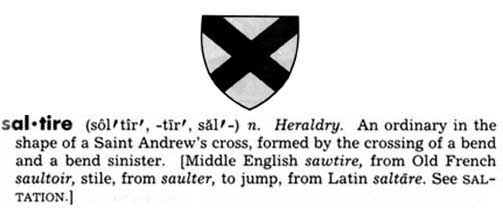
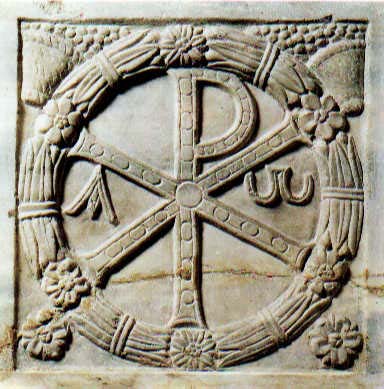
The symbol of the Society of Sts. Peter & Andrew is a Petrine cross with a saltire cross over top of it. In the left corner of the crest there is an anchor, and in the right corner there is the Chi Rho symbol. Above all these the Papal Keys rest in the center.


The Petrine Cross
The origin of St. Peter's symbol comes from the tradition that Simon Peter was crucified upside down, as told by Origen of Alexandria. It is believed that Peter requested this form of crucifixion as he felt he was unworthy to be crucified in the same manner that Jesus died. As such, some Catholics use this cross as a symbol of humility and unworthiness in comparison to Jesus.


The Saltie Cross
As for St. Andrew's cross, the story is almost identical. However, instead of the Petrine Cross, tradition tells us the St. Andrew was martyred on this "X" of a cross.
The Anchor
The Anchor first appears in Christian theology in the Epistle of St. Paul to the Hebrews (6:19-20).  The anchor is a symbol of hope in future existence because the anchor was regarded in ancient times as a symbol of safety.


The Chi Rho
This is one of the earliest symbols of Christianity. It comes from when the Emperor Constantine dreamt of being ordered to put a "heavenly divine symbol"  on the shields of his soldiers. With this on their shields, Constantine's army fought the forces of Maxentius and won the Battle of the Milvian Bridge (312). The Chi Rho is formed by superimposing the first two (capital) letters chi and rho (ΧΡ) of the Greek word "ΧΡΙΣΤΟΣ"  which means Christ.


The Papal Keys
Matthew 6:18 "And I say to thee: That thou art Peter; and upon this rock I will build my church, and the gates of hell shall not prevail against it. [19] And I will give to thee the keys of the kingdom of heaven. And whatsoever thou shalt bind upon earth, it shall be bound also in heaven: and whatsoever thou shalt loose upon earth, it shall be loosed also in heaven." The keys resemble the fact that we are One, Catholic, Holy & Apostolic Church with the authority given by Christ, the King & Our God.


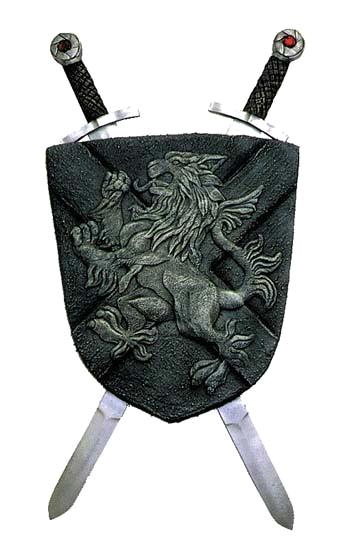
The Shield
The Reason for the shield is because we are the Church Militant, and we are constantly defending ourselves from the wicked and temptations. 


So as a result here is the final product:


Thursday, November 29, 2012

God Or Chaos

The Claims are simple, there is no God. There is no intelligent design. Matter came from nothing, things were put into motion without having a mover and life came from the inanimate. 


     And then it is often said to believe God is the reason for all these miracles is a foolish answer, however, to believe it was chance is not. If nothing existed, you have a zero percent chance of something coming into existence. (I don't mean if nothing is detectable, I mean nothing exists. Things go in and out of detection all the time, however existence is either there or not.) If you have a rock, and there is nothing to move it. There is a zero percent chance it will move (Newton's Laws).  If you have no life, there is no chance life will come about. So where did design come from? Design comes from a designer. If you saw a pottery jar made of clay or a chair made of wood, you would be called a fool to claim that nature, in its chaos, is what caused its creation. Archaeologist uncover entire building and cities made of inanimate things, and the first reaction is to say man made this. Why is it any different when it comes to biological life? To claim that God is the designer of our world, for some reason is foolish? Man is no where near the design capability of God. Let us just compare the differences between what God (or to atheists, chance) can create, with what the minds of MIT can create. 

God: http://vimeo.com/53914149#embed
MIT Minds: http://youtu.be/ZxLaqjSAzwI


It is truly possible that by chance a jar of clay came into existence without the design of a human being. In addition, (if  the laws of physic broke and life, matter and motion did come into existence without God) it is also possible to say that the Cheetah came into existence without the design of a God. However, what is more likely? Which is the more educated guess? 

The more educated guess is clearly that each have a designer! The Cheetah was designed by God, the jar by a human. It is true you can never know for certain, but I have full belief that a man is the designer of jars and God is the designer of the Universe and everything in it